
New Bill Could Affect Anti-Weaponization Fund Payments
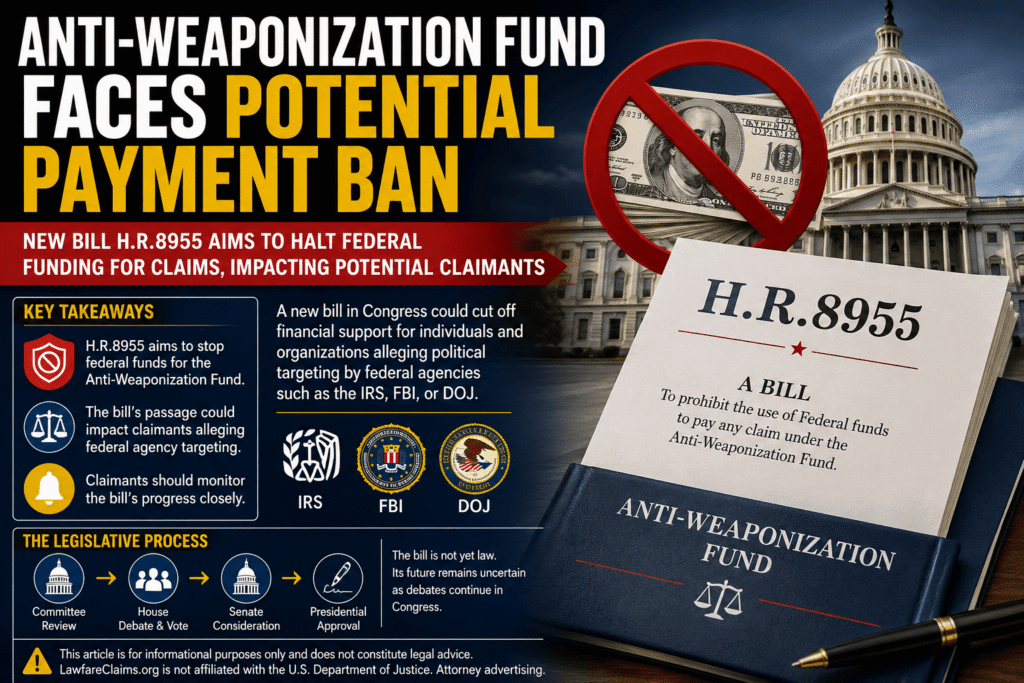
A new bill in Congress could create major changes for people and organizations using the Anti-Weaponization Fund. Lawmakers introduced H.R.8955 to stop the use of federal funds for payments connected to the fund.
If lawmakers pass the bill, claimants could lose an important source of financial support. As a result, many people may face new challenges when pursuing claims involving federal agencies.
The proposal has already attracted attention because it connects to larger discussions about government oversight and accountability. In addition, many political groups continue debating how the government should use public funds.
This article is for informational purposes only and does not constitute legal advice. LawfareClaims.org is not affiliated with the U.S. Department of Justice. Attorney advertising.
Understanding the Anti-Weaponization Fund
The Anti-Weaponization Fund provides financial support to individuals, conservative organizations, and small businesses that believe federal agencies treated them unfairly.
For example, some people claim that agencies such as the IRS, FBI, or DOJ targeted them because of political beliefs or activities. Therefore, the fund aims to help people who want to challenge investigations, audits, or enforcement actions.
Supporters believe the fund helps protect citizens and increases accountability. They also argue that people should have resources if they think government agencies acted unfairly.
However, critics have raised concerns about the program. Some question whether taxpayer money should support these types of claims. Others believe that current legal systems already provide ways for people to seek help.
Because of these different views, the fund has remained a topic of political discussion.
Potential Impact on Claimants
If lawmakers approve H.R.8955, claimants could face uncertainty about future financial support.
Many people may start asking important questions, such as:
- Will future payments continue?
- Could current claims face delays?
- Will rules change?
- Should people look for other financial options?
Additionally, legal claims often require money for attorneys, paperwork, and other costs. Without support from the fund, some people may hesitate before moving forward.
Furthermore, smaller organizations and individuals with limited resources could face greater challenges.
Risks and Uncertainties
Although lawmakers introduced H.R.8955, it still needs to move through several steps before becoming law.
First, committees review the bill. Next, the House and Senate debate and vote on it. Finally, the President may sign it into law.
Meanwhile, supporters say the bill could reduce unnecessary spending and protect taxpayer money.
However, critics argue that the bill could make it harder for people to pursue claims against federal agencies.
As a result, the future impact of the proposal remains uncertain.
Looking Ahead
The debate around the Anti-Weaponization Fund will likely continue in the coming months.
Therefore, people and organizations connected to the fund should watch future developments closely. They should also stay informed about congressional actions and possible policy changes.
The final outcome will depend on political decisions and ongoing discussions about government accountability and oversight.