
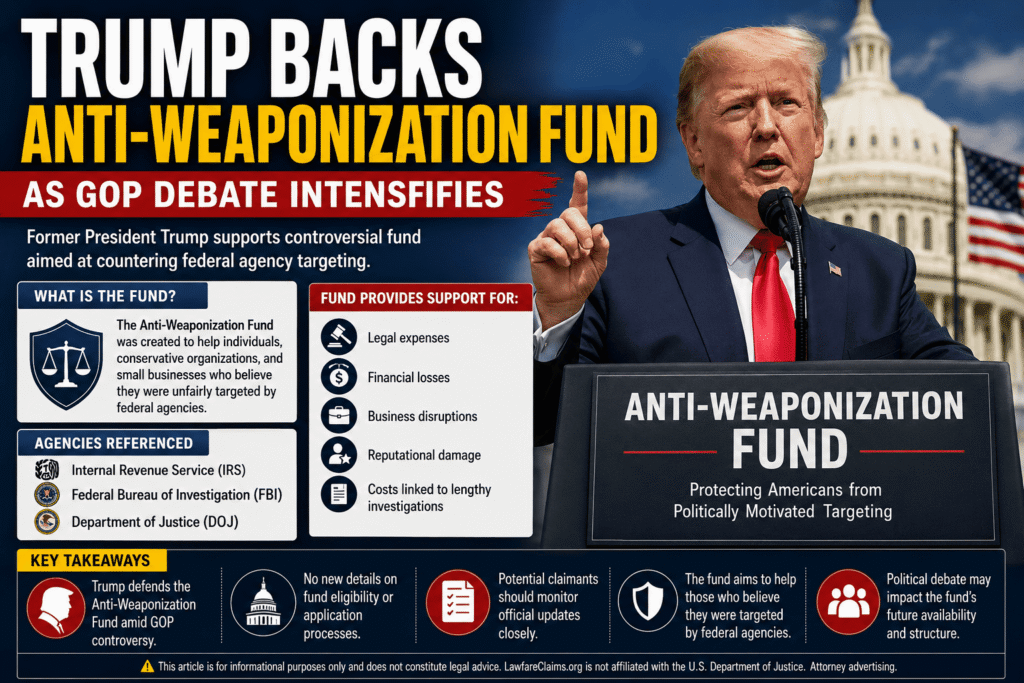
Trump’s Defense of the Anti-Weaponization Fund
On May 22, 2026, former President Donald Trump publicly defended the Anti-Weaponization Fund, a controversial initiative created to counter perceived political targeting by federal agencies. The fund sparked growing debate within the Republican Party, with lawmakers and political groups expressing different opinions about its purpose and implementation.
Trump defended the initiative publicly. However, he did not share new details about eligibility standards or application procedures.
Legal experts and advocacy organizations continue monitoring new developments related to the fund. The ongoing debate also increased national attention on federal accountability, political targeting, constitutional protections, and government transparency.
Understanding the Anti-Weaponization Fund
The Anti-Weaponization Fund was created to help individuals, conservative groups, and small businesses that believe federal agencies unfairly targeted them because of political beliefs.
Reports connected to the initiative specifically reference agencies such as:
- Internal Revenue Service (IRS)
- Federal Bureau of Investigation (FBI)
- Department of Justice (DOJ)
The fund aims to provide financial assistance for individuals challenging investigations, audits, or enforcement actions they believe were politically motivated.
Supporters believe the Anti-Weaponization Fund could protect constitutional rights and improve accountability within federal agencies.
The proposal remained politically controversial after its introduction, especially regarding the initiative’s scope and the standards used to determine who qualifies for support.
GOP Debate Continues Over the Fund’s Purpose
Political disagreement within the Republican Party continues shaping discussions surrounding the Anti-Weaponization Fund.
Some Republican lawmakers and conservative groups strongly support the initiative. They argue that citizens deserve legal protection if they believe federal agencies unfairly targeted them because of political views or affiliations.
Supporters of the fund believe stronger oversight systems are necessary to prevent misuse of government authority and maintain public trust in federal institutions.
Other Republicans questioned how the initiative may operate and how officials may review future claims. Critics argue that politically sensitive compensation programs require strict oversight systems, transparent procedures, and clearly defined evidence standards.
The political disagreement created uncertainty about the initiative’s future and possible policy changes.
Implications for Potential Claimants
For individuals and organizations that believe federal agencies unfairly targeted them, the Anti-Weaponization Fund could become an important legal and financial resource.
However, there are still no new public updates explaining:
- How to apply for assistance
- Who officially qualifies for support
- What evidence may be required
- How claims will be reviewed
- When application procedures may begin
Officials continue advising potential claimants to monitor announcements related to the initiative.
Legal experts also recommend maintaining detailed records related to investigations or enforcement actions. Important documentation may include:
- Audit notices
- Financial statements
- Legal filings
- Agency communications
- Investigation-related records
Attorneys say strong documentation may become important if officials introduce formal claim procedures later.
The lack of clear guidance created uncertainty for many individuals and organizations considering possible claims under the initiative.
Risks and Considerations
While the Anti-Weaponization Fund may offer financial assistance for individuals pursuing legal claims against federal agencies, several political and legal considerations remain connected to the initiative.
The ongoing political debate within the GOP could affect the future availability of the fund, including possible changes to funding structures, eligibility standards, or oversight procedures.
Legal experts also warn that legal action against federal agencies can become expensive, time-consuming, and politically sensitive.
Some analysts believe continued controversy surrounding the initiative may influence future congressional discussions regarding oversight systems and government accountability.
Experts recommend that potential claimants stay informed about legal developments and future announcements related to the Anti-Weaponization Fund.
Looking Ahead
Political discussion surrounding the Anti-Weaponization Fund continues as potential claimants, advocacy groups, lawmakers, and legal analysts monitor future developments.
Former President Trump’s public defense of the initiative intensified national debate regarding federal accountability, political targeting, constitutional protections, and government transparency.
Supporters say the initiative could protect individuals facing politically motivated investigations. However, questions about eligibility standards and oversight systems still remain.
For now, individuals interested in the Anti-Weaponization Fund are being encouraged to stay informed through official channels and announcements regarding how the initiative may operate in the future.
This article is for informational purposes only and does not constitute legal advice. LawfareClaims.org is not affiliated with the U.S. Department of Justice. Attorney advertising.