
New Legal Battle Raises Questions About January 6 Compensation Claims
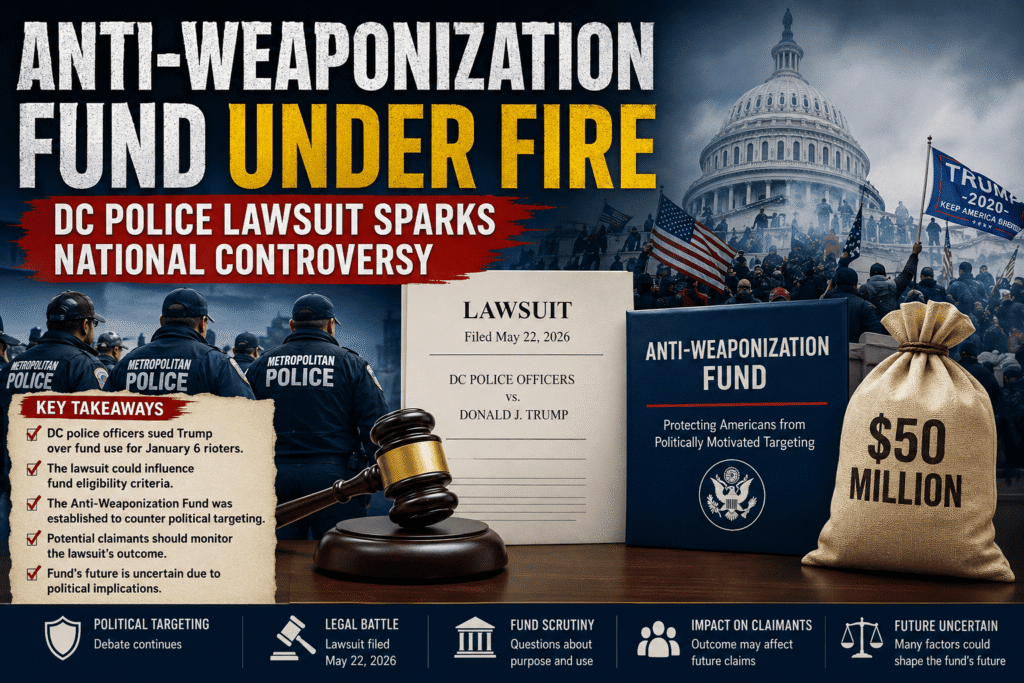
The Anti-Weaponization Fund has entered the center of a growing national controversy after several DC police officers filed a lawsuit against former President Donald Trump over the possible use of the fund to compensate individuals connected to the January 6 Capitol riots. The lawsuit has intensified political debate surrounding federal accountability, government transparency, and the future of the controversial initiative.
Filed on May 22, 2026, the lawsuit challenges whether the Anti-Weaponization Fund should support claims involving January 6 defendants. The officers argue that extending financial assistance to Capitol riot participants would conflict with the original purpose of the program and damage public trust in the initiative.
As the legal battle continues, lawmakers, legal experts, advocacy organizations, and potential claimants are closely monitoring the case. Many believe the lawsuit could significantly influence future eligibility standards, oversight procedures, and political support connected to the fund.
The controversy has already sparked nationwide discussion about constitutional protections, political targeting, and the balance between government authority and individual rights.
What Is the Anti-Weaponization Fund?
The Anti-Weaponization Fund was reportedly established by the Department of Justice (DOJ) in 2025 to support individuals and organizations claiming they were unfairly targeted by federal agencies because of their political beliefs or affiliations.
According to reports surrounding the initiative, the DOJ allocated approximately $50 million to assist people facing financial and legal challenges connected to allegedly politically motivated investigations or enforcement actions.
The proposal referenced agencies such as:
- Internal Revenue Service (IRS)
- Federal Bureau of Investigation (FBI)
- Department of Justice (DOJ)
Supporters of the Anti-Weaponization Fund argue that the initiative could help protect constitutional rights while increasing accountability and transparency within federal institutions.
Advocates also believe the fund could create a formal process for citizens seeking assistance after allegedly facing politically motivated investigations, audits, or enforcement actions.
DC Police Officers Challenge the Fund’s Possible Expansion
The lawsuit filed by DC police officers focuses on concerns that the Anti-Weaponization Fund may extend far beyond its original purpose.
According to reports, the officers are challenging the possibility that January 6 defendants could receive compensation or financial support through the initiative. Critics argue that using the fund in connection with Capitol riot participants could create serious legal and political consequences.
The officers reportedly believe the initiative was designed to support individuals claiming political targeting by federal agencies, not people associated with the Capitol riots. They argue that expanding eligibility could undermine the credibility of the program and intensify political division across the country.
Supporters of the lawsuit also believe clearer standards are necessary to define who qualifies for assistance and what constitutes political targeting under the program.
Meanwhile, supporters of broader eligibility argue that constitutional protections and legal rights should apply equally to all citizens, regardless of political controversy.
Political Debate Continues to Intensify
The Anti-Weaponization Fund lawsuit has triggered strong reactions across the political landscape.
Critics of the initiative argue that connecting the fund to January 6 defendants could damage public confidence in the program and raise concerns about misuse of taxpayer-supported resources. Some lawmakers reportedly want stricter oversight measures and tighter eligibility standards before the initiative expands further.
Others believe the controversy reflects deeper concerns regarding political bias, selective investigations, and government accountability.
Supporters of the Anti-Weaponization Fund continue to argue that citizens deserve protection against politically motivated investigations or unfair treatment by federal agencies. Advocacy groups focused on constitutional rights say stronger oversight mechanisms are necessary to maintain public trust in democratic institutions.
Political analysts expect the debate to remain highly controversial as lawmakers continue discussing the role of federal agencies, constitutional protections, and government transparency.
Questions About Eligibility and Oversight
The lawsuit has also increased scrutiny regarding how the Anti-Weaponization Fund determines eligibility.
At present, many important details surrounding the initiative remain unclear, including:
- Eligibility requirements
- Application procedures
- Evidence standards
- Claim review systems
- Funding restrictions
Legal experts believe the lawsuit could force lawmakers and federal officials to clarify how politically sensitive claims should be reviewed in the future.
Some analysts warn that unclear eligibility rules may lead to additional legal disputes and political criticism. Others believe the initiative requires independent oversight and transparent review procedures to maintain credibility.
Attorneys familiar with constitutional law recommend that potential claimants maintain detailed records connected to investigations or enforcement actions. Important documents may include:
- Official notices
- Financial statements
- Legal filings
- Agency communications
- Investigation-related records
Strong documentation could become increasingly important if the DOJ introduces stricter review procedures or revised eligibility standards following the lawsuit.
Potential Impact on Future Claimants
The outcome of the DC police lawsuit could significantly affect individuals and organizations considering future claims under the Anti-Weaponization Fund.
If courts determine that the fund may support January 6-related claims, lawmakers could respond by tightening eligibility standards or limiting certain categories of compensation requests. Some legal experts believe the controversy could reshape how future claims are reviewed and approved.
Potential claimants are now being encouraged to closely monitor legal developments and future announcements regarding the administration of the initiative.
At the same time, advocacy organizations continue pushing for clearer guidelines, independent oversight systems, and transparent claim review processes to ensure fairness.
The ongoing controversy also reflects broader national concerns about government authority, political neutrality, and public trust in federal institutions.
Public Trust and Federal Accountability Remain Central Issues
The Anti-Weaponization Fund debate highlights growing public concern regarding federal accountability and political neutrality inside institutions such as the DOJ, FBI, and IRS.
Supporters of government reform argue that transparency and oversight are essential for preserving confidence in democratic systems. They believe citizens should have access to legal protections if they experience politically motivated treatment by federal agencies.
Critics, however, warn that politically charged compensation programs could increase polarization and create additional controversy if oversight systems remain unclear.
Even so, the lawsuit has reignited national discussions surrounding constitutional protections, federal authority, and citizens’ rights.
What Happens Next?
The future of the Anti-Weaponization Fund remains uncertain as the lawsuit continues through the legal system.
Legal experts believe the case could redefine how the initiative operates, who qualifies for assistance, and how politically sensitive claims are reviewed moving forward.
For now, lawmakers, advocacy groups, legal analysts, and potential claimants continue monitoring developments connected to the lawsuit.
Whether the Anti-Weaponization Fund eventually expands, faces restrictions, or undergoes major policy changes, the controversy surrounding the DC police lawsuit is expected to shape future debates about government accountability, political targeting, and federal oversight for years to come.