
A Closer Look at How the Fund Is Being Set Up
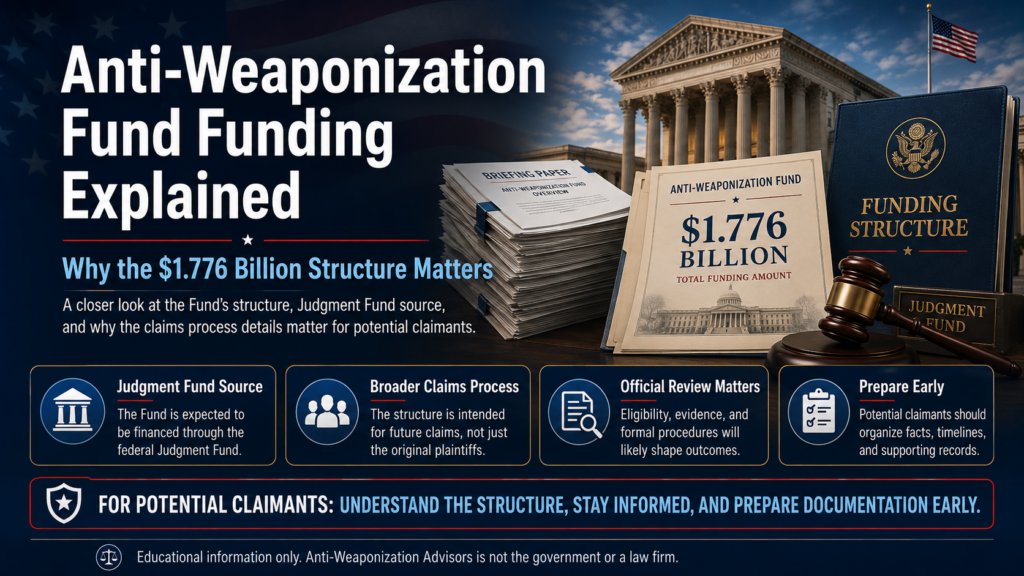
The newly announced Anti-Weaponization Fund has attracted national attention not only because of its political significance, but also because of how it is being funded and structured. According to the U.S. Department of Justice, the Fund will receive $1.776 billion from the federal Judgment Fund, a permanent appropriation used by the government to pay certain settlements and judgments.
The Fund was announced as part of the settlement agreement in President Donald J. Trump v. Internal Revenue Service, a case connected to the leak of President Trump’s tax information. DOJ stated that President Trump, Donald Trump Jr., Eric Trump, and the Trump Organization will receive a formal apology, but no monetary payment or damages from the settlement. Instead, the settlement created a broader fund intended to hear and redress claims from others who may have suffered from government weaponization or lawfare.
For potential claimants, this distinction is important. The Fund is not described by DOJ as a direct payout to the Trump plaintiffs. Rather, it is described as a broader claims process for others who may allege harm from improper government targeting, selective enforcement, or lawfare. DOJ materials state that the Fund is intended to provide a systematic process for claims to be heard and reviewed.
A DOJ funding document further explains that the settlement agreement directed the Attorney General to issue an order establishing funding and other relevant requirements for the Fund. The document confirms that the funding is based on projected future claims, not the value of the Trump plaintiffs’ own claims.
This makes the Anti-Weaponization Fund different from a normal private settlement. In a typical lawsuit settlement, money usually goes directly to the parties involved in the case. Here, the original plaintiffs are not receiving damages, while the Fund is designed to create a larger review process for other potential claimants.
The DOJ announcement also states that the Fund must send quarterly reports to the Attorney General identifying who received relief and what form of relief was awarded. At the Attorney General’s direction, the Fund can be audited. DOJ also states that the Fund must protect private information, avoid fraud, and stop processing claims no later than December 1, 2028.
For people considering whether they may have a future claim, these details matter. A fund of this size does not mean that payments will be automatic. It means that the government has announced a pool of money and a claims review structure, but claimants will still likely need to meet eligibility standards, submit evidence, and follow formal rules once the official process opens.
The Judgment Fund itself has become a central part of the public debate. DOJ says the Anti-Weaponization Fund will be paid through the Judgment Fund, which it describes as a perpetual appropriation that allows DOJ to settle and pay cases. Reuters reported that legal experts believe court challenges to the Fund may face hurdles, partly because the Judgment Fund is already an established mechanism for paying certain government settlements.
At the same time, the Fund has triggered legal and political criticism. Reuters reported that opponents have questioned whether the Fund could be used to compensate Trump allies or individuals connected to politically sensitive investigations. The same report notes that challengers may need to establish legal standing before courts can block payouts or undo parts of the settlement.
The Associated Press also reported that lawsuits have already been filed seeking to block payouts from the $1.776 billion Fund. These legal challenges raise questions about oversight, the Fund’s legal authority, and whether the program could be used in ways critics consider improper.
For potential claimants, this means the Fund should be viewed as a developing process. The official DOJ announcement is real and significant, but the practical claims process, eligibility standards, required documentation, and review procedures are still key unanswered questions. It is also possible that lawsuits, congressional debate, or further DOJ guidance may affect the timing or structure of the Fund.
This is why early preparation is important. Anyone who believes they may have been harmed by government weaponization, lawfare, selective enforcement, or improper use of government authority should begin organizing their records now. A strong future submission may require a clear timeline, supporting documents, agency notices, court filings, correspondence, financial records, employment records, legal bills, media coverage, or other evidence showing both the alleged government action and the harm caused.
The amount of the Fund has created public attention, but the strength of any future claim will likely depend on facts, documentation, and legal review. A claimant should be prepared to explain what happened, when it happened, who was involved, what government action caused harm, and what damages resulted.
Anti-Weaponization Advisors is monitoring the Fund’s development and helping potential claimants prepare before the official application process opens. Our role is to help individuals and organizations organize case details, structure timelines, gather supporting documents, and connect with appropriate attorneys or legal consultants for independent review.
The official claims process has not yet opened. Submitting information to Anti-Weaponization Advisors does not mean that a DOJ claim has been filed, and it does not guarantee eligibility, approval, compensation, or any specific result. However, early preparation may help potential claimants be better positioned once the government releases formal instructions.
As this Fund continues to develop, the most important step for potential claimants is simple: preserve records, organize facts, and stay informed through official DOJ updates.
Sources: U.S. Department of Justice announcement, DOJ Anti-Weaponization Fund document, Reuters, and Associated Press reporting.